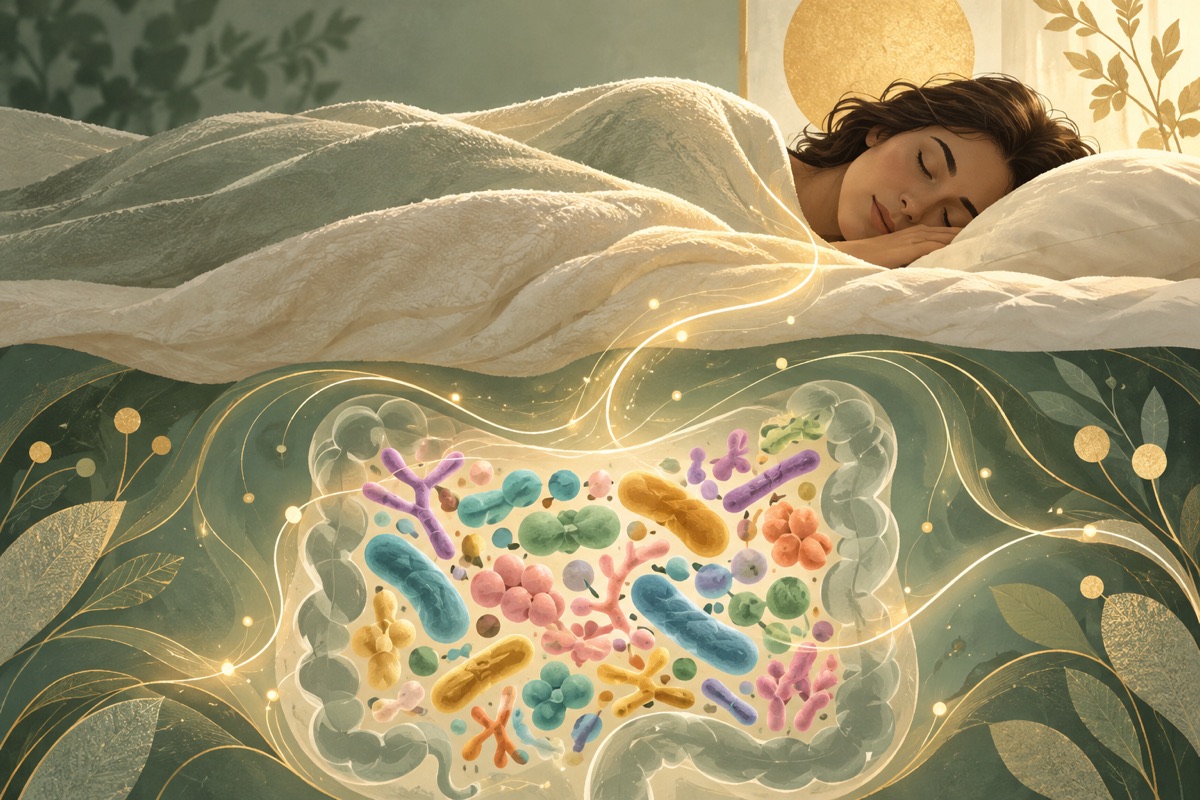
AI-generated illustration
A comparison involving 420 people found different gut microbial profiles in depression accompanied by REM sleep behavior disorder than in depression alone.…
Read story: Gut profiles differ when depression accompanies a specific sleep disorder ↗
AI-generated illustration
An analysis of 38,283 women compared dietary patterns with weight change across the years before and after menopause. Patterns expected to produce…
Read story: Weight change around menopause: a study of whole dietary patterns ↗
AI-generated illustration
In 1,350 CARDIA participants averaging age 61, blood biomarkers were measured at year 35. Some Alzheimer-related patterns were associated with poorer concurrent…
Read story: Blood markers linked to cognitive changes in midlife ↗
AI-generated illustration
Thirty-seven older adults completed twelve weeks of supervised exercise twice weekly, emphasizing muscle loading while lengthening. Stair climbing and timed rising-and-walking performance…
Read story: Older-adult exercise study finds mixed changes in physical function ↗
AI-generated illustration
Researchers examined eight familial melanoma genes in nearly 697,000 people across two datasets. Disease-associated variants exceeded a 2.5% prevalence threshold among people…
Read story: Genetic risk in melanoma: what age at diagnosis and multiple tumours reveal ↗
AI-generated illustration
In the RECOVER-VITAL analysis of 959 adults, researchers evaluated fifteen or twenty-five days of nirmatrelvir–ritonavir. At day ninety, neither regimen significantly improved…
Read story: Extended antiviral treatment showed no benefit in long COVID trial ↗
AI-generated illustration
The SenCat project compared more than 30 senescence conditions across 14 human cell types. RNA and protein measurements revealed no single marker…
Read story: No single signature identifies every senescent cell ↗
AI-generated illustration
In newborn mice, C. difficile colonization changed intestinal inflammatory and repair responses without obvious illness. Some cellular changes persisted into adulthood. Tissue…
Read story: A symptom-free gut bacterium may leave lasting developmental changes ↗
AI-generated illustration
Researchers evaluated cell-senescence protein signatures in two longitudinal cohorts: 1,275 BLSA participants and 997 InCHIANTI participants. Signatures from different cell types showed…
Read story: Blood protein patterns track different dimensions of ageing ↗
AI-generated illustration
Researchers compared postmortem brain tissue from ten people with Alzheimer’s disease and ten without it. Measuring DNA folding and gene activity together…
Read story: Alzheimer’s research looks beyond DNA’s letters to how it folds ↗
AI-generated illustration
Researchers examined 99 lymph-node sections from 51 donors aged 18–86, covering roughly 20 million cells. The location of senescence markers shifted with…
Read story: Mapping immune ageing: cell patterns shift in lymph nodes ↗
AI-generated illustration
Some antibodies from people with long COVID targeted nervous-system proteins. Transferring patient-derived IgG into mice produced fatigue-like behaviour, balance problems, heightened pain…
Read story: Autoantibodies offer a clue to neurological long COVID ↗
AI-generated illustration
Combining more than ten million cellular and spatial gene-expression profiles, researchers identified nine recurring tumour-neighbourhood patterns. Patterns recovered from blood cell-free DNA…
Read story: Can blood reveal the cellular neighbourhood around a tumour? ↗
AI-generated illustration
Researchers tested human antibodies that bind alpha-gal in laboratory experiments. Some blocked allergic patients’ IgE from binding selected allergens; particular antibody formats…
Read story: Antibodies that block the immune response in meat allergy ↗
AI-generated illustration
A randomized trial of 830 children with severe early childhood caries evaluated silver diamine fluoride. At six months, 54% of treated lesions…
Read story: Liquid dental treatment stopped progression in some childhood cavities ↗