
The story in detail
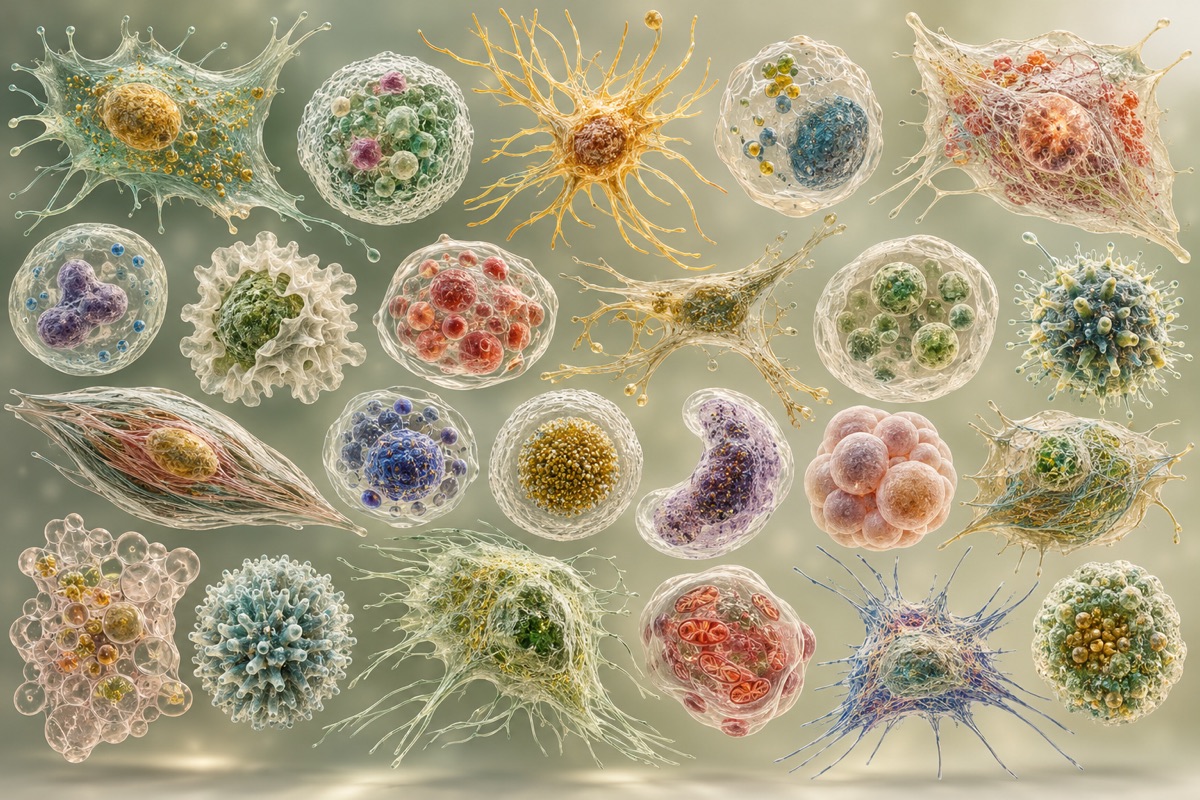
Identifying senescent cells is complicated because different tissues may not share one reliable marker. Researchers created SenCat by measuring gene and protein activity across 14 human cell types under more than 30 senescence conditions. No single unique marker identified every senescent cell type, although shared damage-response and metabolic pathways emerged. Computational signatures were then examined in additional human and mouse datasets.
This catalogue is a research resource, not a consumer test that precisely states someone’s biological age. Experimentally induced cellular states may differ from gradual changes in living tissue. Its value is a broader framework for comparison rather than reliance on one signal. It may support future intervention research, but the study itself does not demonstrate a rejuvenation treatment.
Study date: 2026-06-11 · Story: 20 October 2026
What was found?
The SenCat project compared more than 30 senescence conditions across 14 human cell types. RNA and protein measurements revealed no single marker that uniquely identified senescent cells across all conditions.
What does it mean?
Combining shared biological pathways with cell-specific differences could improve how researchers recognize these cells. Derived signatures were also tested in human and mouse datasets.
Limitations
This is a research atlas, not a clinical diagnostic test or rejuvenation treatment. Cellular senescence is one biological process and should not be equated with whole-body ageing.
Sources and review scope
Original article (DOI) · Reviewed source 1
The original research abstract was reviewed.
Sources last checked: 20 October 2026.
Editorial expansion: 21.10.2026
Keep this story
Feedback to the editor
Only the editor can read this; it is not a public comment. Do not include personal health information.
Sign in to send feedback