
The story in detail
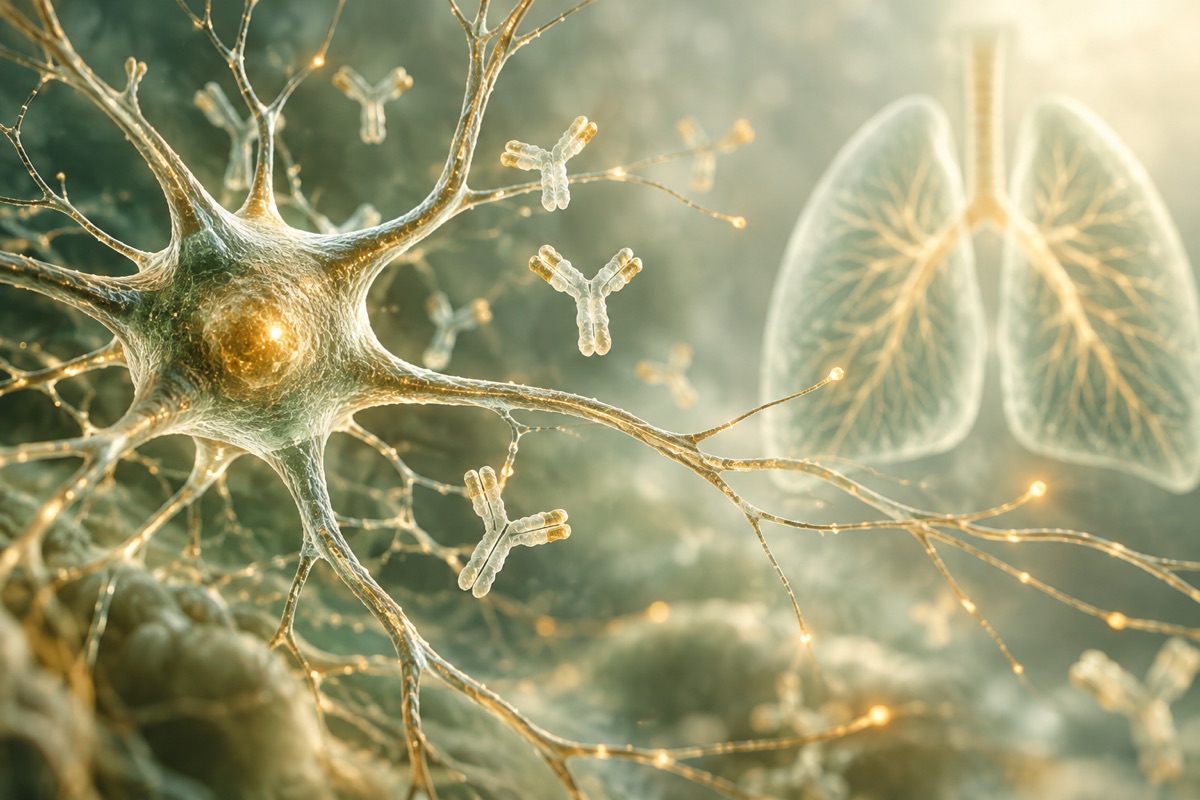
Long COVID neurological symptoms are unlikely to have a single explanation. Researchers studied antibodies that react with a person’s own tissues and found stronger nervous-system reactivity in some people with neurocognitive symptoms. Transferring purified patient IgG into mice produced changes including fatigue-like behaviour, impaired coordination, pain sensitivity and small-fibre nerve damage.
This goes beyond observing an association by testing a possible biological effect, but an antibody-transfer model does not represent every form of human long COVID. The results support an immune contribution in a subgroup, not a universal explanation. They do not establish a diagnostic antibody test or prove that antibody-targeting treatment helps patients. Controlled clinical trials would need to identify who might benefit and at what risk.
Study date: 2026-05-28 · Story: 20 October 2026
What was found?
Some antibodies from people with long COVID targeted nervous-system proteins. Transferring patient-derived IgG into mice produced fatigue-like behaviour, balance problems, heightened pain sensitivity and small-nerve-fibre damage.
What does it mean?
The results support a possible role for self-targeting antibodies in neurological symptoms among some patients, identifying biological mechanisms that can be investigated further.
Limitations
Antibody transfer into mice is not a treatment trial in humans. The findings do not establish a single cause for all long COVID cases or prove that antibody-directed treatments will help patients.
Sources and review scope
Original article (DOI) · Reviewed source 1 · Reviewed source 2
The original research abstract was reviewed.
Sources last checked: 20 October 2026.
Editorial expansion: 21.10.2026
Keep this story
Feedback to the editor
Only the editor can read this; it is not a public comment. Do not include personal health information.
Sign in to send feedback