
The story in detail
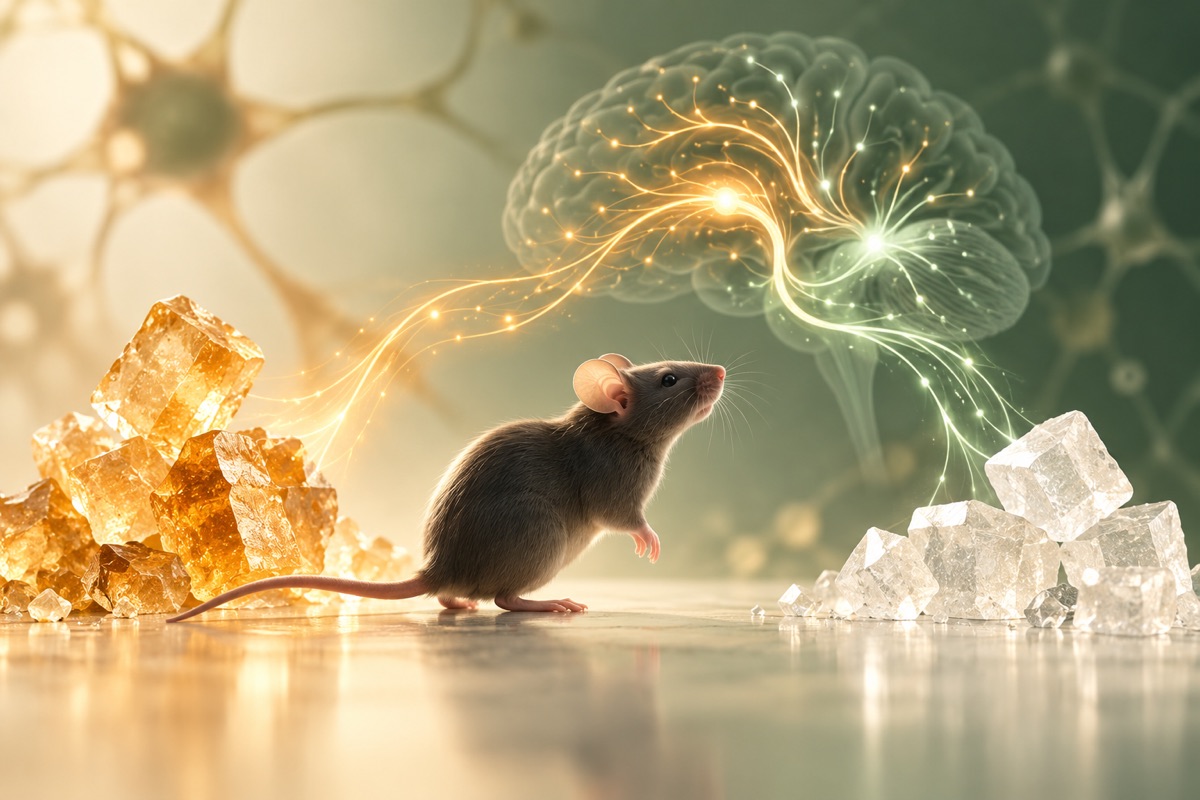
Two sugars providing equal calories may send different signals to hunger circuits. In mice, fructose suppressed AgRP neuron activity less strongly than glucose. Short-term total food intake did not change, but the neural response helped shape food preference. Researchers identified a gut-hormone and vagal pathway through which fructose communicated with these neurons.
The experiment suggests that the brain can respond to nutrient identity as well as energy content. It does not directly reproduce eating fruit or mixed meals in humans, and it does not establish that fructose alone causes obesity in people. Translating the mechanism into dietary advice would require attention to portions, food structure and longer-term human evidence. The immediate contribution is a clearer map of gut–brain communication.
Study date: 2026-06-10 · Story: 20 October 2026
What was found?
When mice received equal-calorie fructose or glucose, fructose suppressed hunger-related AgRP neuron activity less strongly. The research indicates that signals travelling from the gut to the brain can differ according to the type of sugar.
What does it mean?
The findings challenge the idea that the brain detects food energy only through its calorie content and help explain gut–brain communication.
Limitations
This was not a human dietary trial. One neural response cannot establish long-term weight effects or the health impact of a particular food. It provides no reason to avoid fruit.
Sources and review scope
Original article (DOI) · Reviewed source 1
Original PubMed abstract and indexed mechanistic excerpt reviewed; only retrievable findings included.
Sources last checked: 20 October 2026.
Editorial expansion: 21.10.2026
Keep this story
Feedback to the editor
Only the editor can read this; it is not a public comment. Do not include personal health information.
Sign in to send feedback