
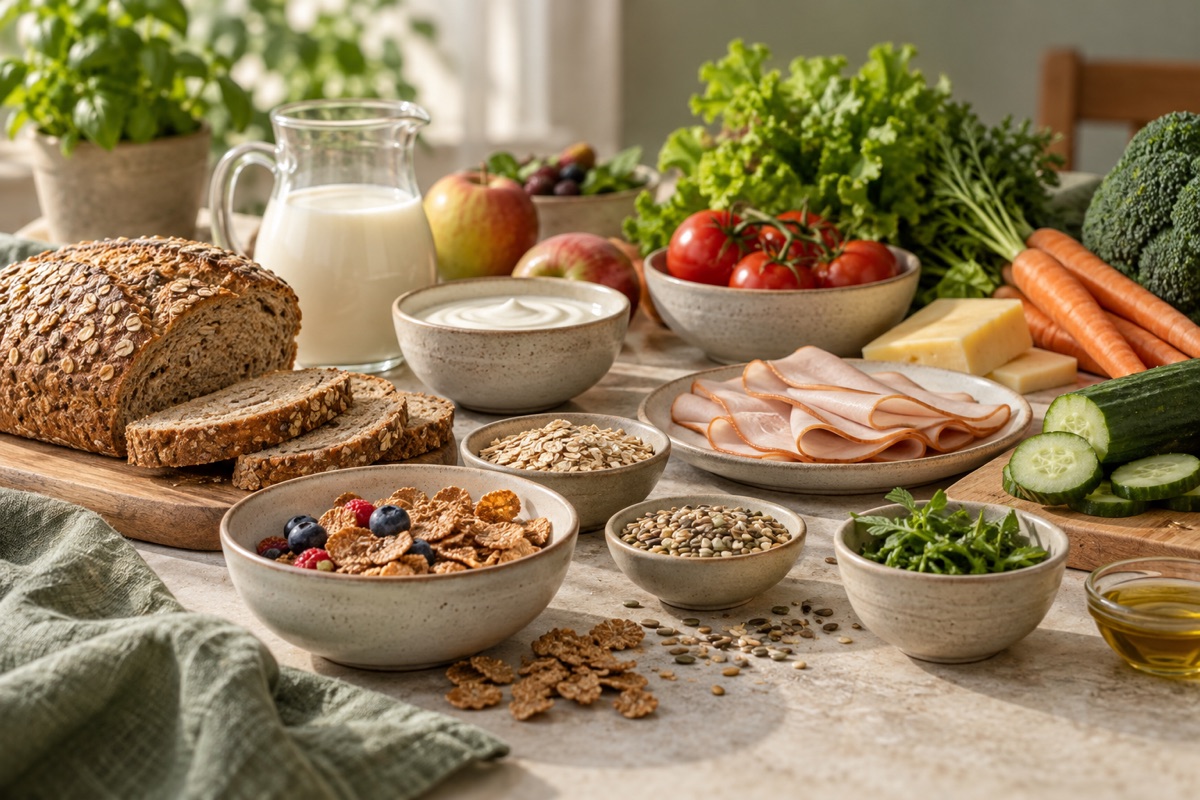
The ultra-processed category includes foods with very different nutritional profiles. A large observational study highlights the limits of treating them as one uniform exposure.
Story details
Researchers linked dietary reports from 461,682 NIH-AARP participants with subsequent cancer records. Median follow-up was 18.8 years. In the main analysis, the highest versus lowest intake quintiles had a hazard ratio of 0.97 (95% confidence interval 0.91–1.03), with no statistically significant difference. Yet food-group associations pointed in opposite directions. That makes a sweeping “cancer fears disproved” interpretation inappropriate. The study considered one cancer outcome in a particular population, rather than every possible health effect of food processing. Diets and available products also change over time, something a single baseline questionnaire cannot fully capture. For readers, the useful distinction is between a food’s processing classification and its nutritional composition: they are not interchangeable descriptions. The authors interpret the findings as consistent with existing dietary guidance on whole grains, fibre, dairy, calcium and avoiding processed meat. This is not a recommendation to increase ultra-processed foods or start calcium supplements. Neither the overall finding nor the subgroup results settle all dietary questions. The paper was published on 15 October; the 21 October news report is later coverage of that research.
What was found?
Whole-grain, fibre, dairy and calcium intake from ultra-processed sources was associated with lower colorectal cancer incidence, while meat intake from those sources was associated with higher incidence. Dairy, calcium and meat showed associations in the same directions for non-ultra-processed sources too.
What does it mean?
The findings do not prove that every ultra-processed food is harmless.
Limitations
Observational data cannot establish causation, and diet was measured only once at baseline. Exploratory subgroup analyses require caution about multiple comparisons and classification errors.
Sources and review level
Original research · DOI: 10.1371/journal.pmed.1005251. First online publication: 2026-10-15; news coverage used for this package: 2026-10-21.
Full text examined.
Keep this story
Feedback to the editor
Only the editor can read this; it is not a public comment. Do not include personal health information.
Sign in to send feedback