
The story in detail
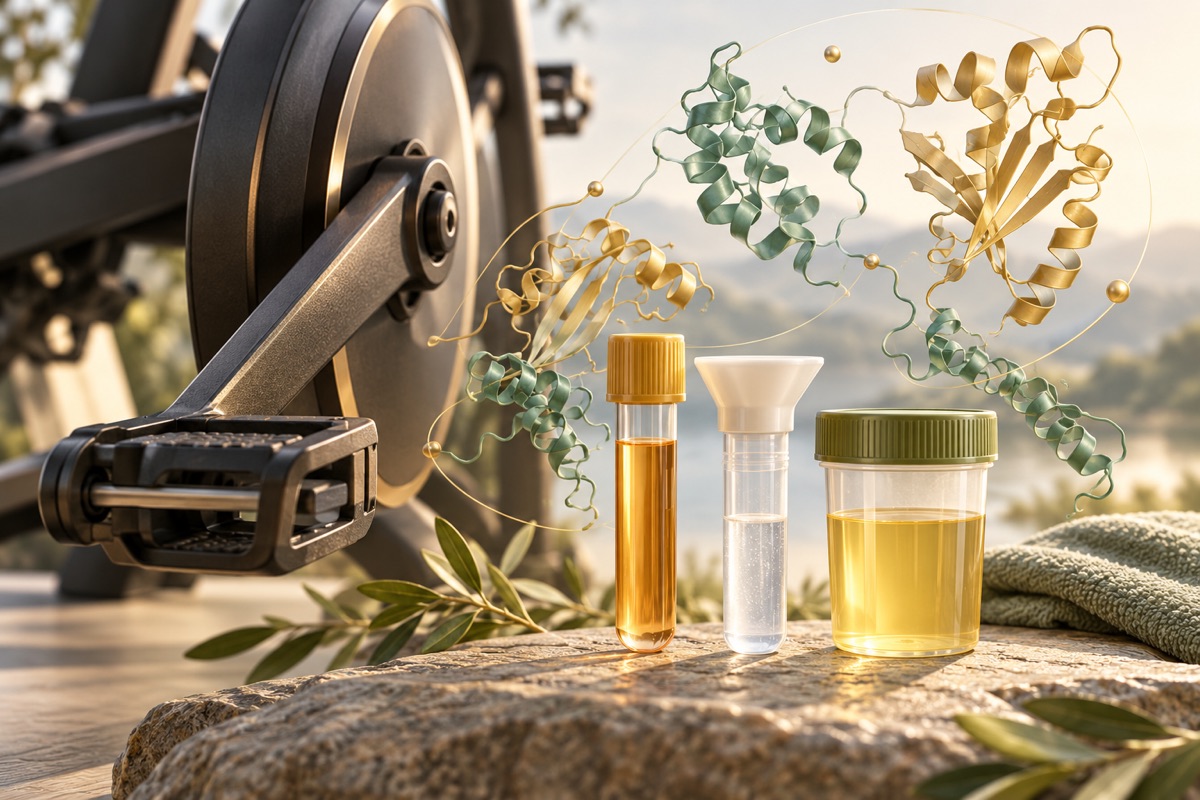
Exercise can rapidly alter proteins beyond the muscles themselves. Researchers collected blood, saliva and urine at multiple time points around acute exercise in 25 healthy men. Thousands of proteins changed, with different timing across fluids. Selected blood responses were assessed in an independent group, while genetic analyses and fly experiments explored candidate mechanisms.
The resulting atlas is an open research resource for investigating communication between exercise and other tissues. A changing protein does not automatically cause a health benefit. The initial male-only sample and single-session setting limit scope, and genetic associations or animal experiments do not establish human treatments. The work helps prioritise molecules for further investigation rather than recommending a supplement or a particular exercise prescription.
Study date: 2026-10-12 · Story: 20 October 2026
What was found?
After one cycling session in 25 healthy men, researchers found changes in more than 3,000 proteins across plasma, saliva and urine. A separate cohort confirmed many blood-protein responses across ages, sexes and exercise types.
What does it mean?
The open dataset may help researchers explore communication between organs during exercise.
Limitations
The initial group was small and male-only. Acute protein changes do not directly establish reduced disease risk. Genetic links and animal experiments do not amount to a ready treatment for humans.
Sources and review scope
Original article (DOI) · Reviewed source 1
The original abstract and relevant methods and results were checked.
Sources last checked: 20 October 2026.
Editorial expansion: 21.10.2026
Keep this story
Feedback to the editor
Only the editor can read this; it is not a public comment. Do not include personal health information.
Sign in to send feedback