
The story in detail
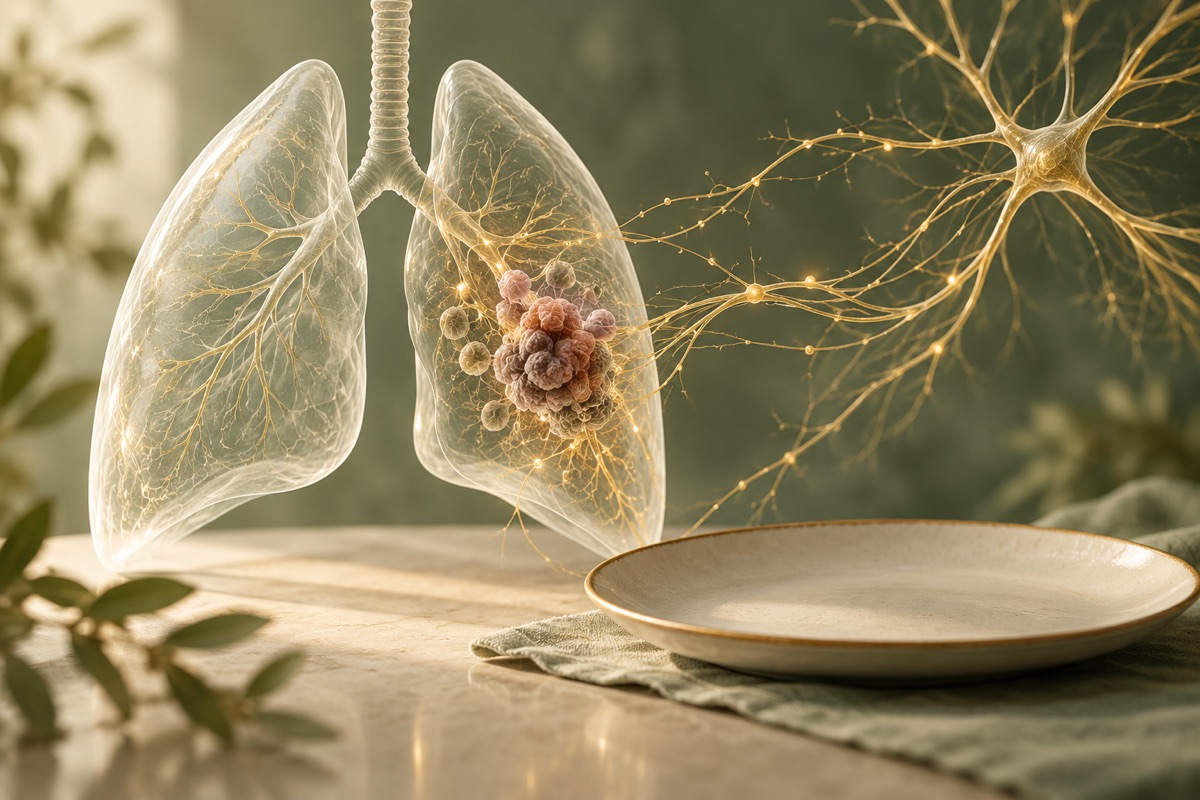
Cancer cachexia involves muscle and weight loss that cannot be explained simply by eating less. Researchers studied links between tumours, diet and sensory nerves in particular lung-cancer models. A high-fat diet intended to increase energy intake unexpectedly worsened some illness behaviours. Experiments implicated locally produced PGE2 acting through sensory nerves, and interrupting that pathway reduced symptoms in the models.
These findings concern specific animal and tumour settings. They do not explain every case of human cachexia or justify patients changing nutritional support themselves. Nor do they show that high-calorie nutrition is generally harmful. The contribution is a new mechanistic question about local tumour–nerve communication, alongside circulating signals, that future treatment research may investigate.
Study date: 2026-07-02 · Story: 20 October 2026
What was found?
In preclinical lung cancer models, researchers linked tumor production of the signaling molecule PGE2 to sensory nerves involved in cancer-associated wasting. A high-fat diet intended to increase calorie intake worsened illness under some experimental conditions.
What does it mean?
The findings suggest that cachexia involves local tumor–nerve communication, beyond inadequate food intake alone. This pathway offers a direction for further research.
Limitations
These were preclinical experiments, not a patient dietary trial. They do not establish a human treatment or justify changing diet independently.
Sources and review scope
Original article (DOI) · Reviewed source 1
Preclinical research; primary abstract checked.
Sources last checked: 20 October 2026.
Editorial expansion: 21.10.2026
Keep this story
Feedback to the editor
Only the editor can read this; it is not a public comment. Do not include personal health information.
Sign in to send feedback