
The story in detail
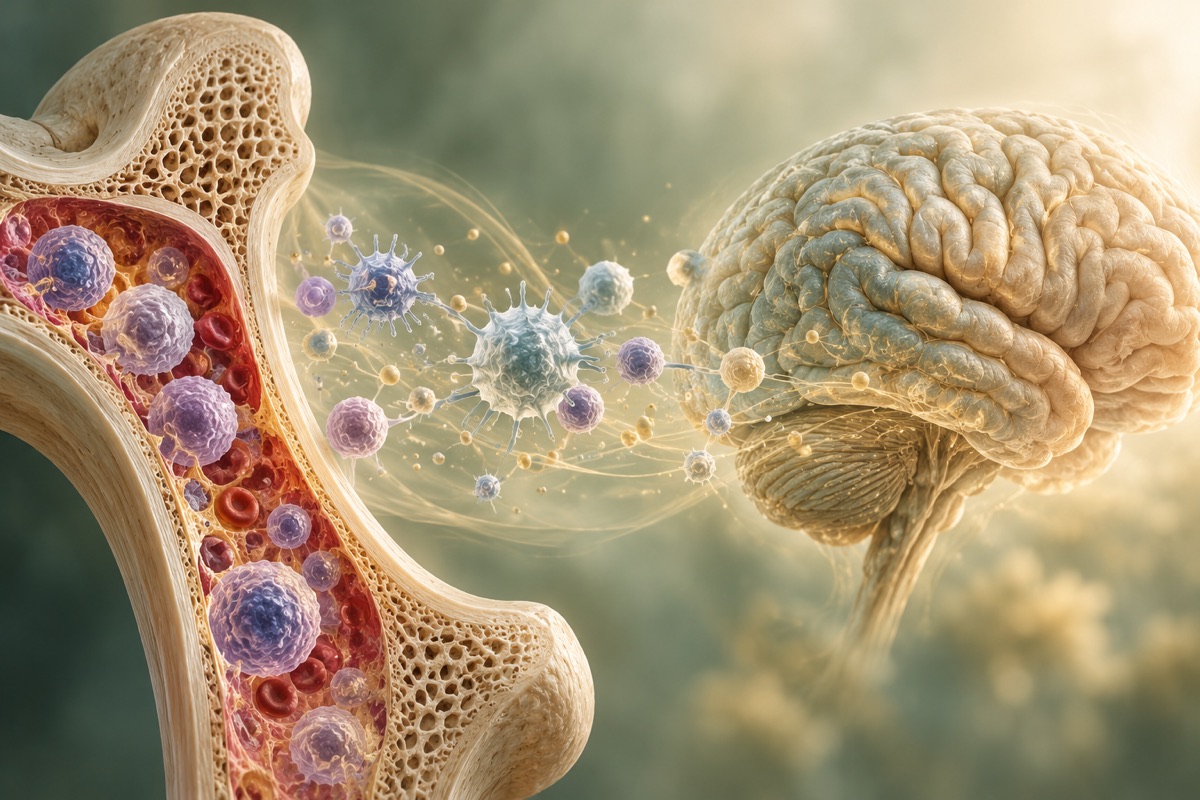
Where do the brain’s immune cells come from over a lifetime? Researchers used naturally accumulated DNA changes as lineage markers in tissue from 20 older people. They found evidence that bone-marrow-derived cells had entered the brain. Single-cell analyses showed that these cells could resemble microglia and contribute substantially to the local immune-cell population.
Separate human cohort analyses also linked some forms of clonal blood-cell production with lower Alzheimer’s risk. That association does not show that increasing these cells would prevent disease. Tissue analysis and observational relationships are not treatment trials. The study broadens understanding of immune-cell origins in the ageing human brain and provides questions for mechanistic research, rather than an intervention ready for patients.
Study date: 2026-07-30 · Story: 20 October 2026
What was found?
Researchers used accumulated genetic changes to trace cell origins in tissues from 20 older people. They identified bone marrow-derived cells in the brain, some with features resembling microglia, the brain’s resident immune cells.
What does it mean?
The finding suggests a more complex relationship between the blood-forming system and brain immunity during ageing.
Limitations
This small tissue-based study was not a treatment trial. Finding these cells does not establish that bone marrow transplantation or another intervention would prevent dementia. Their roles and clinical relevance require further investigation.
Sources and review scope
Original article (DOI) · Reviewed source 1
Original Nature abstract and figure captions reviewed; complete methods were not accessible.
Sources last checked: 20 October 2026.
Editorial expansion: 21.10.2026
Keep this story
Feedback to the editor
Only the editor can read this; it is not a public comment. Do not include personal health information.
Sign in to send feedback