
The story in detail
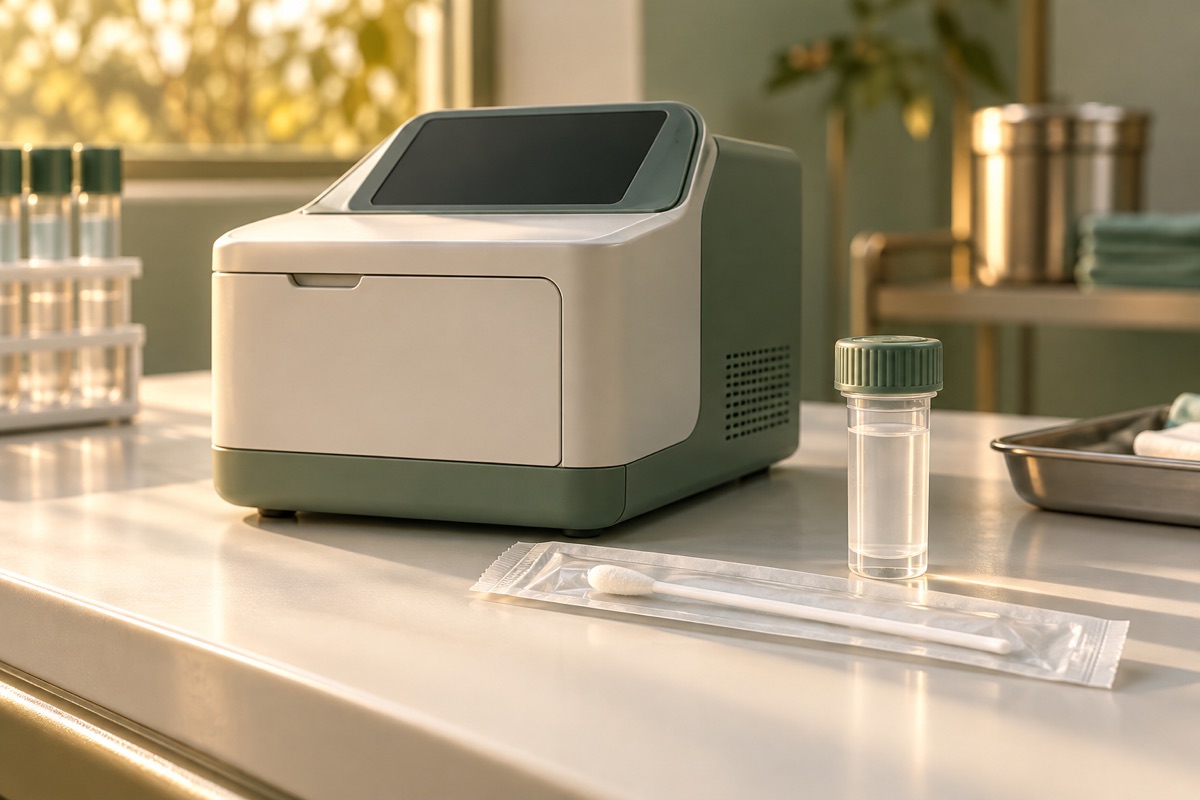
Obtaining sputum for tuberculosis testing can be difficult. At outpatient centres in seven countries, researchers assessed MiniDock MTB using sputum and tongue swabs in 1,380 people with suspected disease. Compared with a culture-based reference, sensitivity was approximately 86% for sputum and 80% for tongue swabs, while specificity was high for both. Usability was also evaluated.
A simpler sample could improve access in some settings, but lower sensitivity means that cases can be missed. A negative result therefore cannot exclude disease in every circumstance. Costs, local infrastructure and placement within diagnostic pathways need assessment. This study measures diagnostic performance; it does not yet show that introducing the test reduces community transmission or mortality.
Study date: 2026-04-29 · Story: 20 October 2026
What was found?
Researchers assessed MiniDock in 1,380 people with suspected pulmonary tuberculosis across seven countries. Against culture-confirmed disease, sensitivity was 85.7% using sputum and 79.6% using tongue swabs; specificity was at least 97.5% with either sample type.
What does it mean?
A portable platform and easier sampling could improve diagnosis access, particularly for people who struggle to produce sputum.
Limitations
The test missed some cases, so a negative result cannot reliably exclude tuberculosis. Results require interpretation alongside symptoms and other clinical assessments.
Sources and review scope
Original article (DOI) · Reviewed source 1 · Reviewed source 2
Multicountry diagnostic study; full text checked.
Sources last checked: 20 October 2026.
Editorial expansion: 21.10.2026
Keep this story
Feedback to the editor
Only the editor can read this; it is not a public comment. Do not include personal health information.
Sign in to send feedback