
The story in detail
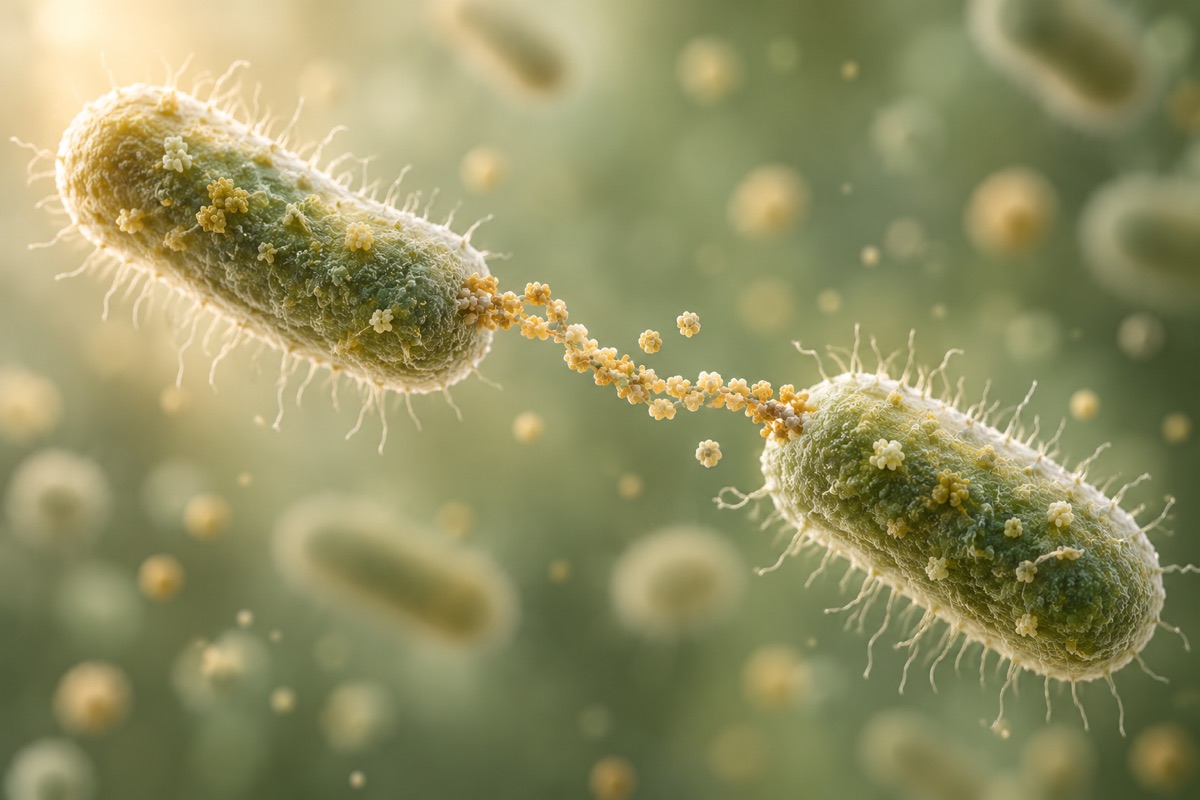
Bacteria exposed to an antibiotic do not necessarily respond in the same way. Researchers found that genetically similar cells could adopt different roles: some released protein-containing vesicles during a stress response, while others took up those proteins. Tracking experiments in Escherichia coli and single-cell analyses showed that antibiotics could stimulate this exchange and improve survival among recipient cells.
Persistence during treatment is not identical to acquiring permanent genetic resistance. The importance of this laboratory mechanism in different human infections remains uncertain. The findings do not suggest stopping antibiotics. Instead, understanding how surviving bacteria temporarily protect themselves could help identify future ways to interrupt that protection. Clinical benefit from targeting this pathway has not yet been demonstrated.
Study date: 2026-06-25 · Story: 20 October 2026
What was found?
Laboratory experiments found that antibiotic stress promoted protein transfer inside small bacterial vesicles. In E. coli, receiving these proteins increased persistence during antibiotic exposure; transfer also occurred between species.
What does it mean?
The results suggest that bacterial survival under drug stress involves more than exchanging genes. Protein sharing may provide additional targets for research.
Limitations
Persistence is not the same as inherited antibiotic resistance. A laboratory mechanism does not directly identify an effective treatment in patients. The study provides no basis for choosing an antibiotic or changing its dose.
Sources and review scope
Original article (DOI) · Reviewed source 1
Original research PubMed abstract reviewed; full text not assessed.
Sources last checked: 20 October 2026.
Editorial expansion: 21.10.2026
Keep this story
Feedback to the editor
Only the editor can read this; it is not a public comment. Do not include personal health information.
Sign in to send feedback