
The story in detail
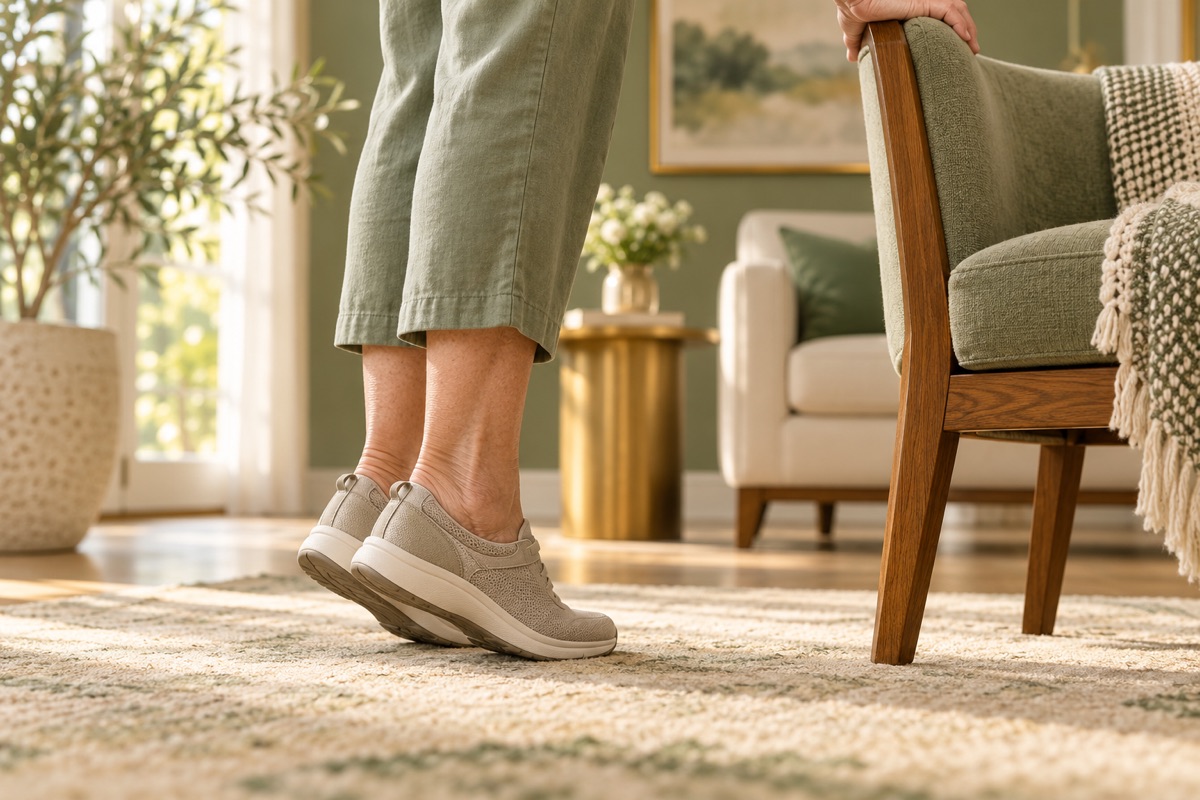
Walking may depend on how quickly calf muscles produce movement as well as their strength. Forty older adults entered a device-assisted training or usual-activity group. The ten-week programme combined rapid calf raises with controlled lowering. Eighteen of the nineteen who started training completed it, and the exercise group improved more in walking speed and selected muscle measures.
Allocation was not random, so differences between groups may have influenced results. The small sample and specific device also limit generalisation. This should be read as a test of one programme, not proof that every calf exercise has equivalent effects. Longer-term independence and fewer falls were not established, and suitability depends on individual ability.
Study date: 2026-10-11 · Story: 20 October 2026
What was found?
In a controlled study involving 40 older adults, 10 weeks of device-assisted calf training improved walking speed and muscle strength more than usual activity. Eighteen of the 19 people who started training completed it.
What does it mean?
Training both strength and movement speed offers one approach to studying mobility in later life.
Limitations
Allocation was not randomized and the sample was small. The device manufacturer funded the study and employed some authors. Results cannot establish equivalent benefits from all home exercises.
Sources and review scope
Original article (DOI) · Reviewed source 1
The original abstract, publication date and conflict-of-interest disclosure were checked; the complete methods were not reviewed.
Sources last checked: 20 October 2026.
Editorial expansion: 21.10.2026
Keep this story
Feedback to the editor
Only the editor can read this; it is not a public comment. Do not include personal health information.
Sign in to send feedback