
The story in detail
Researchers compared dietary patterns and weight changes around menopause using data from 38,283 women in the Nurses’ Health Study II. Over a twelve-year window, some patterns richer in plant foods, whole grains and nuts were associated with less weight gain and lower obesity incidence. Scores emphasising other components showed different relationships.
Women were not randomly assigned diets; food questionnaires and self-reported weight formed the observational evidence. The study therefore cannot establish a guaranteed weight-loss programme or the definitive superiority of one diet. Participants’ occupational and lifestyle characteristics also limit generalisation. The useful perspective is to examine sustainable overall eating patterns rather than one prohibited food, while recognising that individual nutritional needs and health conditions remain relevant.
Study date: 2026-05-20 · Story: 20 October 2026
What was found?
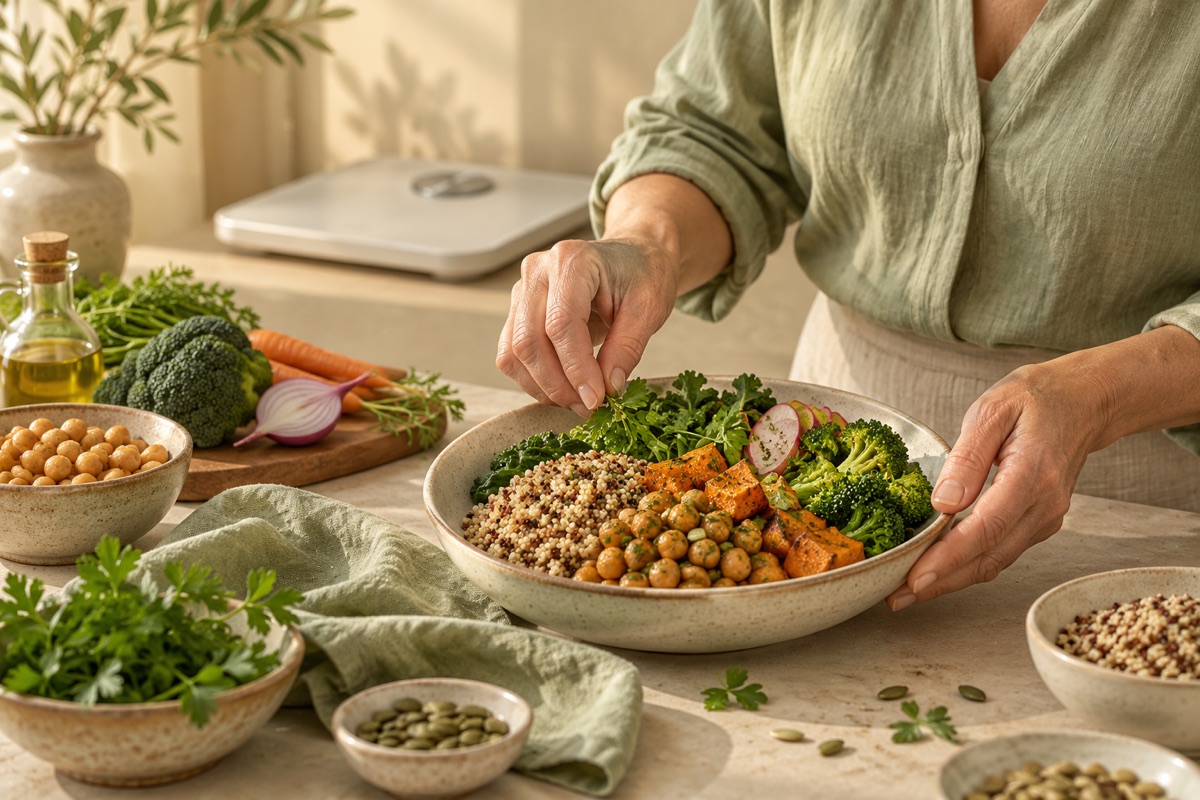
An analysis of 38,283 women compared dietary patterns with weight change across the years before and after menopause. Patterns expected to produce a lower insulin response and those closer to a planetary health diet were associated with less weight gain.
What does it mean?
The study highlights overall dietary habits rather than individual foods during menopause. Long-term patterns warrant further investigation.
Limitations
This observational study cannot establish causation. Self-reported diet and weight may contain errors, and findings may not generalize to all women.
Sources and review scope
Original article (DOI) · Reviewed source 1
Observational research; full text checked.
Sources last checked: 20 October 2026.
Editorial expansion: 21.10.2026
Keep this story
Feedback to the editor
Only the editor can read this; it is not a public comment. Do not include personal health information.
Sign in to send feedback