
The story in detail
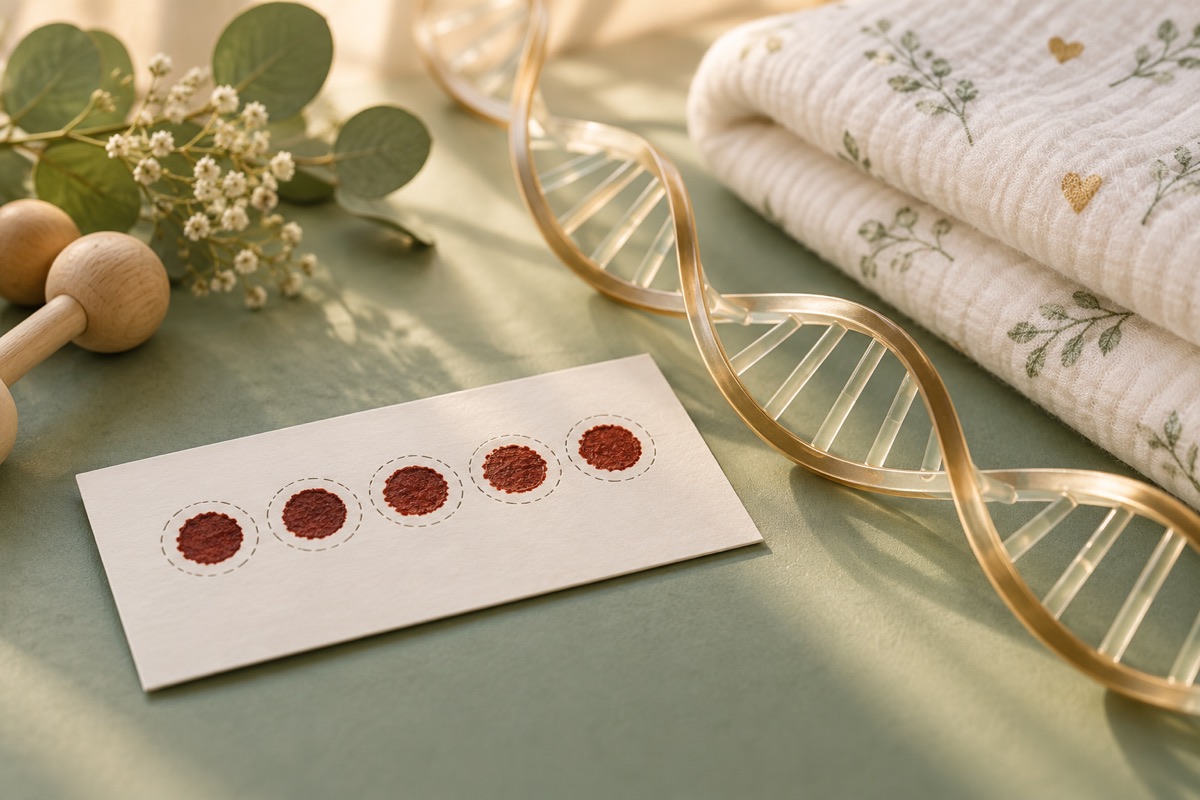
Archived newborn blood spots were used to investigate inherited cancer predisposition. Researchers examined 11 genes in 1,948 Michigan children who later developed selected solid or central nervous system tumours before age eight. Pathogenic or likely pathogenic variants were found in 6.8%, with substantial differences between tumour types.
That percentage does not mean that 6.8% of all newborns will develop cancer: the main study group consisted of children who subsequently had cancer. A variant also does not make disease inevitable. Before population screening, researchers must evaluate uncertain results, family effects, follow-up demands and whether earlier detection improves outcomes. The study explores a screening possibility rather than establishing a proven standard programme for every baby.
Study date: 2026-08-12 · Story: 20 October 2026
What was found?
Researchers examined archived newborn blood samples from 1,948 children who later developed a solid or brain tumor by age eight. Testing eleven genes identified pathogenic or likely pathogenic germline variants in 132 children.
What does it mean?
Some cancer predispositions may be detectable at birth, potentially helping guide appropriate surveillance for children at increased risk.
Limitations
This proportion does not describe all newborns: researchers selected children who later developed cancer. It does not prove screening improves survival or identifies every future cancer.
Sources and review scope
Original article (DOI) · Reviewed source 1 · Reviewed source 2 · Reviewed source 3
Retrospective genetic study; primary abstract findings and investigator institution report checked.
Sources last checked: 20 October 2026.
Editorial expansion: 21.10.2026
Keep this story
Feedback to the editor
Only the editor can read this; it is not a public comment. Do not include personal health information.
Sign in to send feedback