
The story in detail
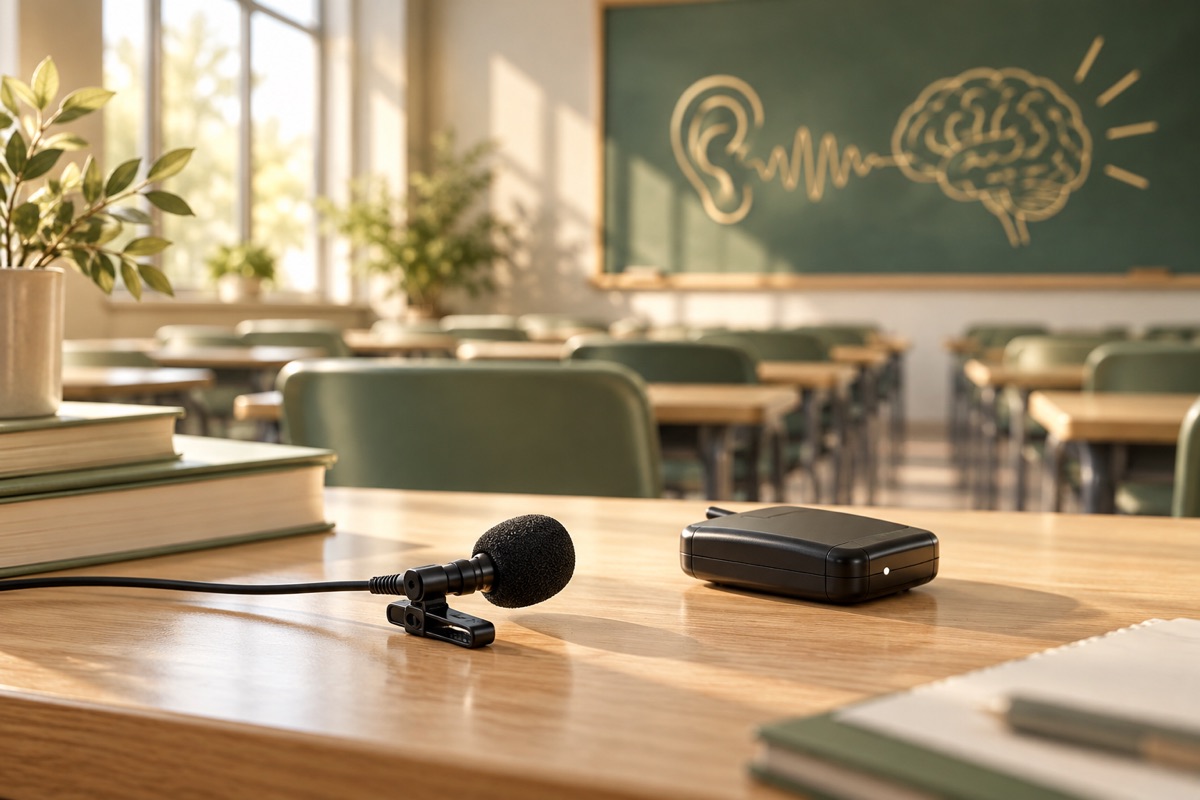
Classroom noise can add difficulty for children who struggle with attention and listening. Researchers evaluated remote microphones that deliver the teacher’s voice more directly. In an initial four-week crossover trial, 35 children experienced conditions with and without the technology. Speech understanding and some auditory-attention measures improved during use. A longer extension found advantages in reading fluency and self-reported quality of life.
However, not every cognitive or auditory-processing measure improved relative to controls. Making speech easier to hear is not the same as treating every cause of inattention. Small samples and differences during longer follow-up limit generalisation. The study investigates an environmental support for selected children, rather than showing that every pupil needs a device or that assessment can be replaced.
Study date: 2026-05-02 · Story: 20 October 2026
What was found?
In a crossover trial involving 35 children with inattention and listening difficulties, remote microphone use improved speech understanding and auditory attention. Children were assessed during periods with and without the technology.
What does it mean?
Separating the teacher’s voice from background noise may offer classroom support for appropriately assessed pupils. The findings highlight environmental barriers alongside a child’s individual difficulties.
Limitations
The sample was small. A longer extension was not randomized and could be affected by self-selection. Results cannot be generalized to all children or interpreted as a cure for ADHD.
Sources and review scope
Original article (DOI) · Reviewed source 1
Original full text, methods and limitations reviewed.
Sources last checked: 20 October 2026.
Editorial expansion: 21.10.2026
Keep this story
Feedback to the editor
Only the editor can read this; it is not a public comment. Do not include personal health information.
Sign in to send feedback